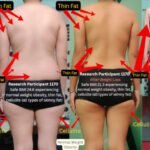
Why Is There No Standardized Baseline Phenotype to Understand Muscle Deficiency (Skinny Fat)?

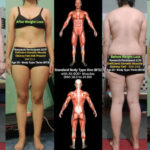
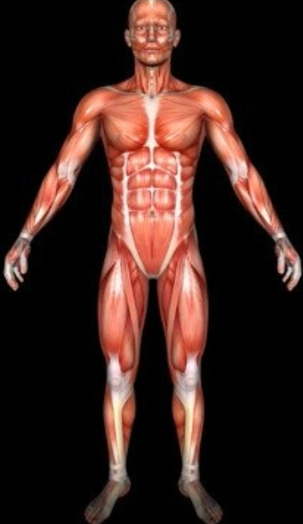
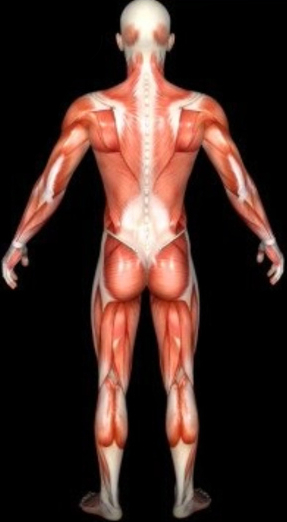 A standardized baseline phenotype for human muscular development does not currently exist, even though science relies on an established anatomical model of the complete human body with all 600+ muscles used throughout anatomy science (1). It has never been formally evaluated as the standardized baseline phenotype. Why?
 Like muscular development, blood pressure varies substantially among individuals, but we don’t say, “Why do we need blood-pressure reference ranges?” Instead, standardized clinical reference ranges allow that variation to be measured, classified, and interpreted. The American Heart Association (AHA) and American College of Cardiology (ACC) define (2, 3, 4) normal adult blood pressure as below 120/80 mmHg, with standardized categories for elevated blood pressure and hypertension. Without such an established reference, clinicians would lack a common baseline against which to interpret individual measurements. How would you know if your blood pressure is healthy or not?
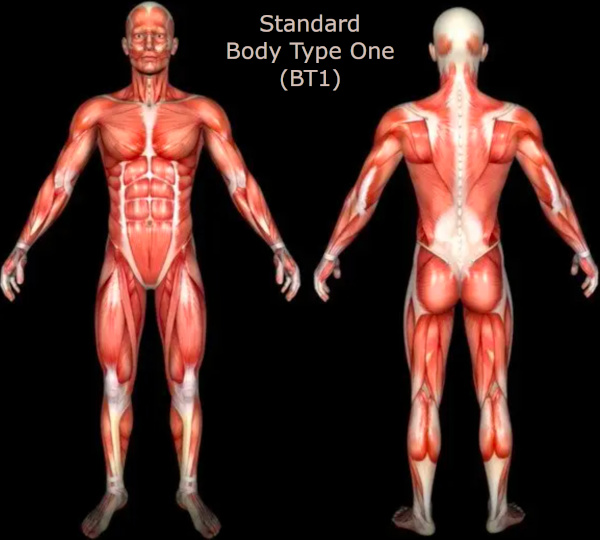 The central question is not whether human bodies vary—they clearly do—but whether the established anatomical reference corresponds to a reproducible empirical pattern in real individuals. Our proposed Standard Body Type One (BT1) baseline phenotype operationalizes the anatomical model as a testable classification hypothesis: If BT1 corresponds to a reproducible phenotypic pattern aligned with the standard anatomical model, then BT1-classified individuals should exhibit a coherent and empirically consistent set of objective anatomical indicators within the existing 492-participant dataset.
Why It Matters – No Standardized Baseline Phenotype to Understand Muscle Deficiency (Skinny Fat)?
Muscle (5) directly affects metabolism, glucose uptake, insulin sensitivity, movement, physical ability, body composition, and overall health. Yet people routinely encounter differences in body shape and composition that current categories cannot adequately explain. There is an important distinction between describing variation and establishing a biological reference for interpreting variation. Descriptors such as “apple,” “pear,” “triangle,” “hourglass,” “round,” and somatotype can describe visible body shapes, but they don’t provide a baseline for reference or scientifically establish the underlying biological structures producing those differences.
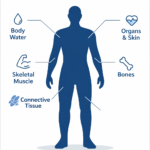
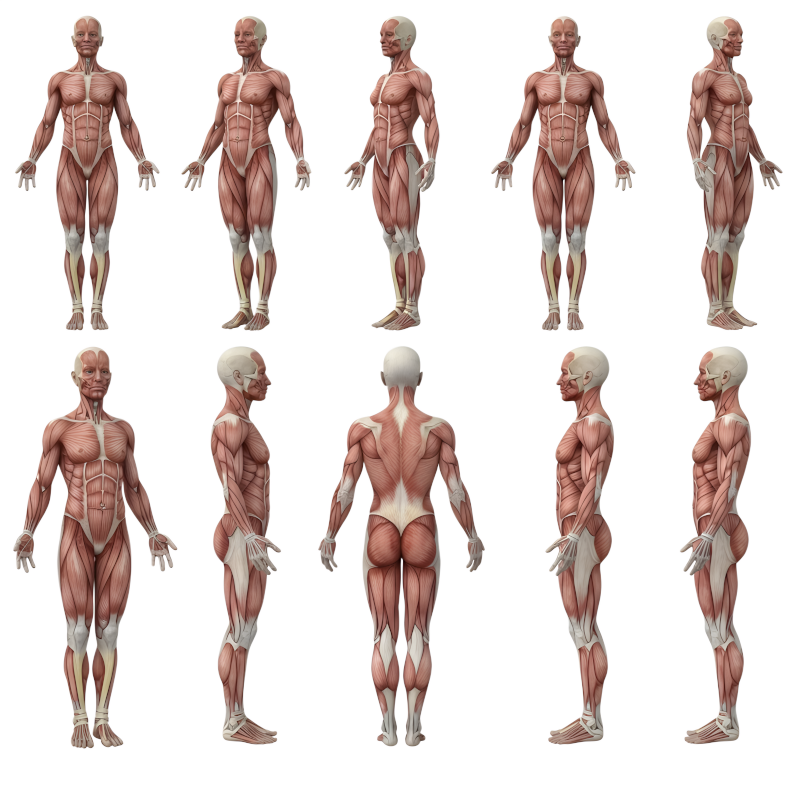 The established anatomical model provides the scientifically grounded starting point because it represents the structural organization of the human body: the skeleton and vertebrae, musculature, and associated structures. In practice, this model functions as an implicit anatomical reference throughout medicine and science. When a person visits a doctor, their physical structure is evaluated against this established model of normal human anatomy, allowing deviations, abnormalities, or pathology to be identified.
But the anatomical model describes the common structural organization of the human body; it doesn’t explain the large biological variation that exists within that organization. It tells us what structures humans have, but not how those structures vary in development across individuals, what constitutes a baseline for that variation, or how differences in their development produce differences in body shape, composition, and physical capacity. The existence of the anatomical model, therefore, doesn’t eliminate the need for a standardized baseline phenotype—it establishes the structural foundation from which such a phenotype can be investigated.
The Consequences of No Standardized Baseline Phenotype
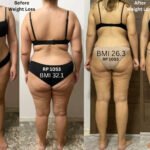
What’s missing is a standardized framework for determining how much foundational muscle a person has as part of their natural underlying body composition. That information is fundamental to understanding an individual’s metabolism, structure, physical capacity, and health. Instead, two people with the same BMI but substantially different underlying phenotypes—one with significantly more natural muscle and one with significantly less—receive the same standardized classification, guidance, and general strategy despite fundamentally different body compositions, metabolic characteristics, and physical capacities. They follow the same diet, exercise, and behavioral protocol yet experience dramatically different outcomes.
The one with more muscle can achieve the physical body shape they seek, while the other (the author in childhood and now) repeatedly fails despite comparable effort. When the existing framework cannot identify or measure the underlying biological differences, the explanation is all too often pushed back onto the individual: their failure is attributed to personal shortcomings (6, 7, 8, 9) such as cheating, lying, miscalculating, or inability to follow the protocol. A person may lose weight, alter their diet, train extensively, and still be unable to produce a body shape that another person achieves with ease. These differences can also affect (10, 11) body image and mental health. The absence of a standardized classification and measurement framework is too often treated as irrelevant to these differences, when it is directly relevant.
 The analysis of our proposed BT1 (12) and our MRI Studies (13) are working on:
- Standardizing the proposed baseline phenotype (BT1) based on the anatomical model and proposed Body Type Science Theory phenotype framework (14)
- Developing a standardized measurement for total muscle tissue
- Developing a baseline average reference to compare #2 to
- Measuring the average muscle of additional proposed phenotypes (Body Type Two/BT2, Body Type Three/BT3, Body Type Four/BT4)
- Measuring all the individual 600+ muscles of the human body and developing a baseline average for each
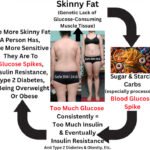
- Galvanizing further scientific research to develop the first-ever diagnosis for skinny fat (deficient muscle, genetically-influenced)
References
- Britannica: human muscle system, Shane W. Cummings and Robin Huw Crompton (Fact-checked by the Editors of Encyclopaedia Britannica. https://www.britannica.com/science/human-muscle-system
- American College of Cardiology: New High Blood Pressure Guideline Emphasizes Prevention, Early Treatment to Reduce CVD Risk, August 14, 2025. https://www.acc.org/about-acc/press-releases/2025/08/13/20/03/new-high-blood-pressure-guideline-emphasizes-prevention-early-treatment-to-reduce-cvd-risk
- American Heary Association, IASA Journals: 2025 AHA/ACC/AANP/AAPA/ABC/ACCP/ACPM/AGS/AMA/ASPC/NMA/PCNA/SGIM Guideline for the Prevention, Detection, Evaluation and Management of High Blood Pressure in Adults: A Report of the American College of Cardiology/American Heart Association Joint Committee on Clinical Practice Guidelines, August 14, 2025, Volume 152, Number 11, Daniel W. Jones, MD, FAHA, Chair, Keith C. Ferdinand, MD, FACC, FAHA, FASPC, Vice Chair, Sandra J. Taler, MD, FAHA, Vice Chair, Heather M. Johnson, MD, MS, FAHA, FACC, FASPC, JC Liaison, Daichi Shimbo, MD, JC Liaison, Marwah Abdalla, MD, MPH, FAHA, FACC, and Jeff D. Williamson, MD, MHS, AGSF. https://www.ahajournals.org/doi/10.1161/CIR.0000000000001356
- NIH, National Library of Medicine: Blood pressure and the new ACC/AHA hypertension guidelines, May 15, 2019, John M Flack and Bemi Adekola. https://pubmed.ncbi.nlm.nih.gov/31521481/
- Skinny Fat Science: Is Muscle/Mass Genetic and How Does It Affect Skinny Fat?, November 20, 2024. https://skinnyfat.fellowone.com/skinny-fat-science/is-muscle-mass-genetic-and-how-does-it-affect-skinny-fat/
- Boston.com: Dr. Fatima Cody Stanford on ’60 Minutes’: Many doctors are biased against obese patients, January 3, 2023, Clara McCourt. https://www.boston.com/news/health/2023/01/03/obesity-60-minutes-fatima-cody-stanford-mass-general-hospital/
- NBC News: When doctors fat-shame their patients, everybody loses, August 24, 2019, Kunal Sindhu and Pranav Reddy. https://www.nbcnews.com/think/opinion/when-doctors-fat-shame-their-patients-everybody-loses-ncna1045921
- U.S. Department of Veteran Affairs, Office of Research & Development: Do doctors dislike overweight patients?, August 3, 2015. https://www.research.va.gov/currents/0815-2.cfm
- NIH, National Library of Medicine: Patients who feel judged about their weight have lower trust in their primary care providers, July 7, 2014, Kimberly A Gudzune, Wendy L Bennett, Lisa A Cooper, and Sara N Bleich. https://pmc.ncbi.nlm.nih.gov/articles/PMC4162829/
- Skinny Fat Science: How Skinny Fat Affects Mental Health, August 21, 2024. https://skinnyfat.fellowone.com/skinny-fat-science/how-skinny-fat-affects-mental-health/
- Skinny Fat Science: Skinny Fat Body Image – Question, June 24, 2026. https://skinnyfat.fellowone.com/skinny-fat-science/skinny-fat-body-image-question/
- Skinny Fat Science: Peer Review of the 492-Participant Dataset to Evaluate the Proposed Baseline Phenotype – Standard Body Type One/BT1 (None to Minimal Skinny Fat), September 16, 2025. https://skinnyfat.fellowone.com/skinny-fat-science/peer-review-of-the-492-participant-dataset-to-evaluate-the-proposed-baseline-phenotype-standard-body-type-one-bt1-none-to-minimal-skinny-fat/
- Skinny Fat Science: Scientific Skinny Fat MRI Study – Proving What Skinny Fat Is, March 26, 2025. https://skinnyfat.fellowone.com/skinny-fat-science/scientific-skinny-fat-mri-study-proving-what-skinny-fat-is/
- Fellow One Research: Body Type Science Theory Research. https://fellowone.com/category/fellow-one-research/the-four-body-types/body-type-science/body-type-quiz/research-data/
Was this article helpful?
Related Posts
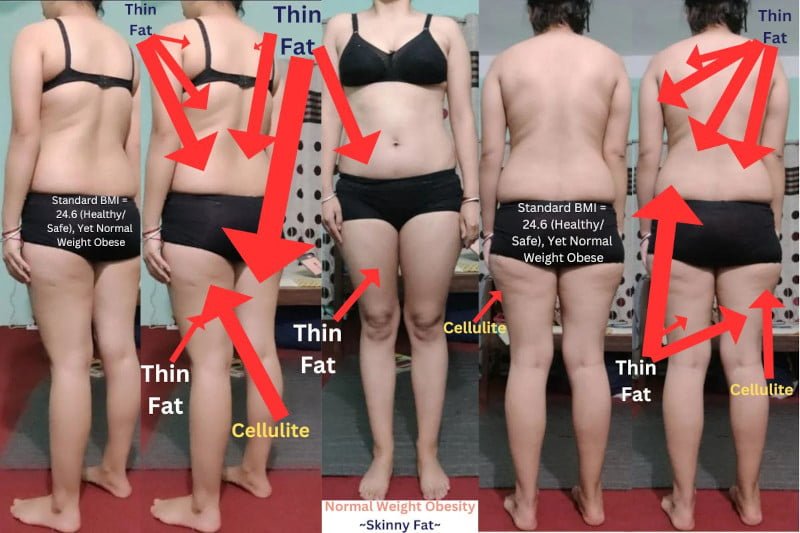
What Is Skinny Fat?
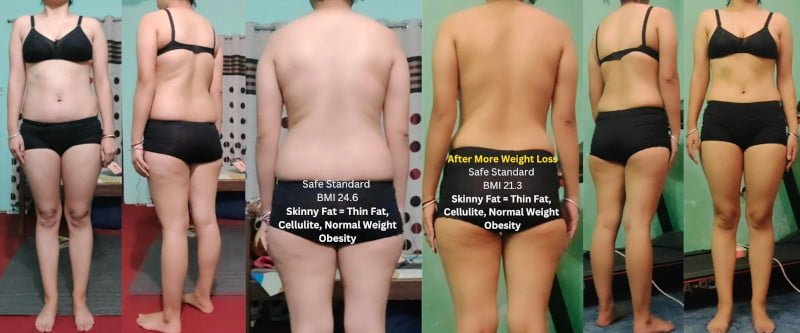
How to Fix Skinny Fat

The Best Skinny Fat Diet, According to Science

Popular Concepts
- Skinny Fat: “Thin Fat”, Cellulite, and Deficient Muscle

- Lean Body Mass (LBM) and Skinny Fat
- What Body Fat Percentage Is Skinny Fat?
- Skinny Fat Body Composition – Before & After Weight Loss
- Skinny Fat & Insulin Resistance
- Body Dysmorphia and Skinny Fat Including Anorexia & Other Eating Disorders
- How Skinny Fat Affects Body Shape
- Skinny Fat Is More Than Just Normal-Weight Obesity