The Importance of a Standardized Baseline Phenotype to Determine Deficient Muscle (Skinny Fat)

Although MRI (magnetic resonance imaging) is considered the gold standard (1, 2, 3) for quantifying skeletal muscle mass and volume, there is currently no standardized method (4) for directly measuring total human muscle tissue, no population baseline for total muscle tissue against which individuals can be compared, and no standardized baseline phenotype for human muscular development.
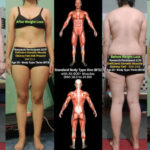
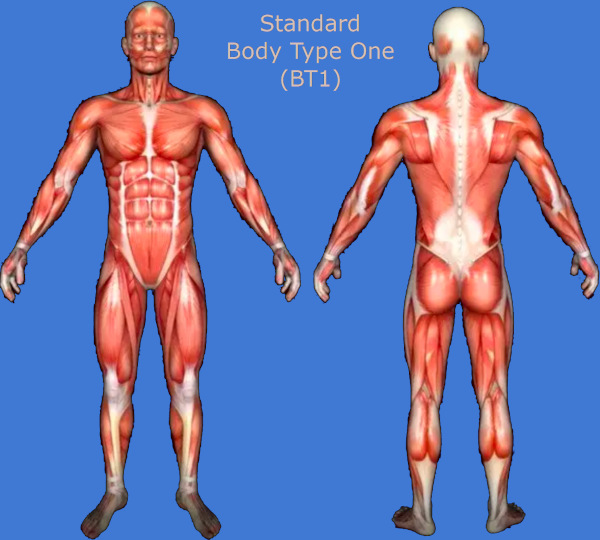 Medical education provides a complete anatomical model (5) of the human body, including the full muscular structure and its ~600 muscles. Our research identifies this model as the Standard Body Type One (BT1) — a proposed baseline phenotype that could serve as the scientific reference for classifying individual muscular variation. Yet this anatomical model is not formally recognized as a standardized phenotype within measurement science, leaving a major gap in how human muscular development is quantified.
Human body shapes vary substantially, but there is no accepted framework for quantitatively classifying individual muscular development relative to a standardized baseline. The existing anatomical model offers an implicit reference for identifying abnormalities, but not for defining normal variation. What size bicep is “normal”? Pectorals? Abdominals? Hamstrings? Calves? Without a standardized baseline phenotype and measurements, we cannot scientifically classify variation in body structure or composition, nor compare individuals to the broader population.
The Importance of a Standardized Baseline Phenotype to Determine Deficient Muscle (Skinny Fat)
 Institutions rely on proxy measurements — BMI (6), lean body mass (LBM)(7), body fat percentage, waist‑to‑hip ratios, and other calculations — because proxies reduce information costs, standardize decisions, and allow large systems to function despite imperfect measurement. When a characteristic cannot be directly measured at scale, proxies fill the gap.
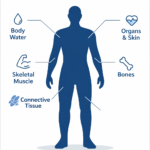
BMI is a prime example: simple, inexpensive, standardized, and easily calculated. It performs its limited function well, but it does not measure muscle. Tools (8) such as DEXA, InBody, and other body‑composition systems also do not directly measure muscle. They measure fat and bone, then combine everything else — water, organs, ligaments, tendons, and muscle — into lean mass, from which muscle is only estimated.
BMI categorizes individuals as underweight, normal‑weight, overweight, or obese, but there is no scientific classification for body shape or muscular development. Social descriptors — apple, pear, triangle, rectangle, round, somatotypes — attempt to fill this gap but lack standardized measurement. Our proposed BT1 and phenotype classification system addresses this blind spot.
Why Does Closing the Measurement Blind Spot Matter?
Muscle is a primary driver of:
- Metabolism (9), energy expenditure, and metabolic regulation
- Body composition and shape (10, 11)
- Movement and functional capacity (12)
- Diet effects (13), glucose uptake (9, 12), and insulin sensitivity (14)
- Exercise response (15)
- Aging trajectories (16)
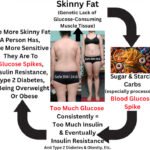
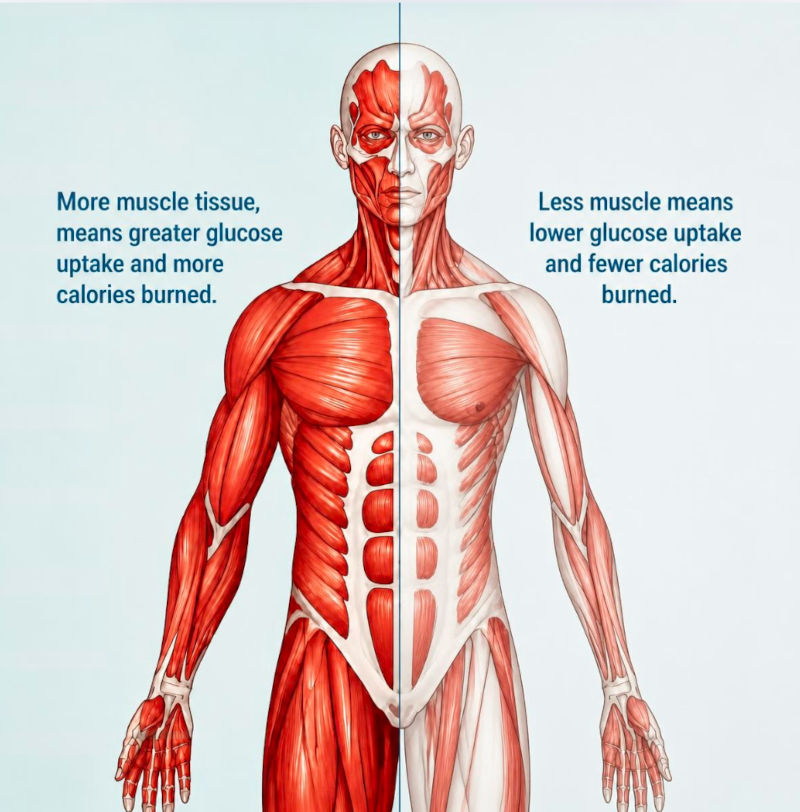 These roles (17, 13, 14) make muscle central to conditions such as insulin resistance, type 2 diabetes, and obesity. Without a standardized muscular phenotype, we cannot accurately measure or compare individuals, characterize meaningful variation, or understand how differences in total muscle tissue influence these core dimensions of human well‑being.
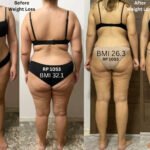
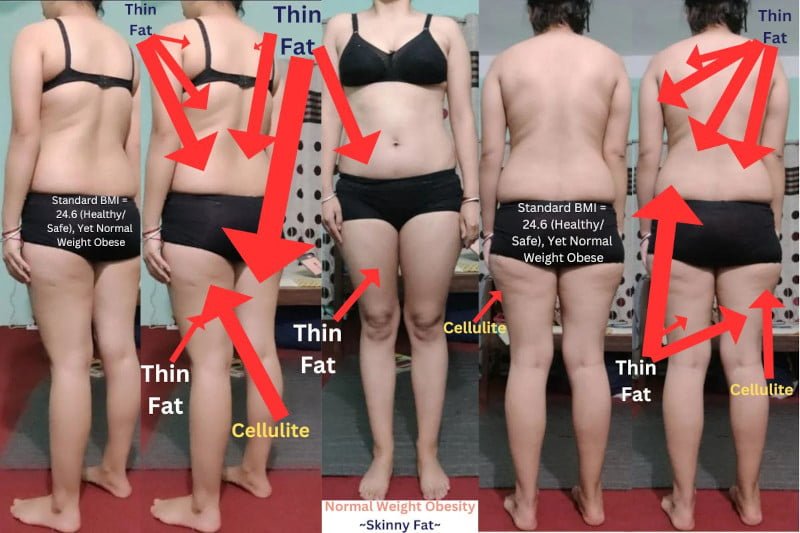
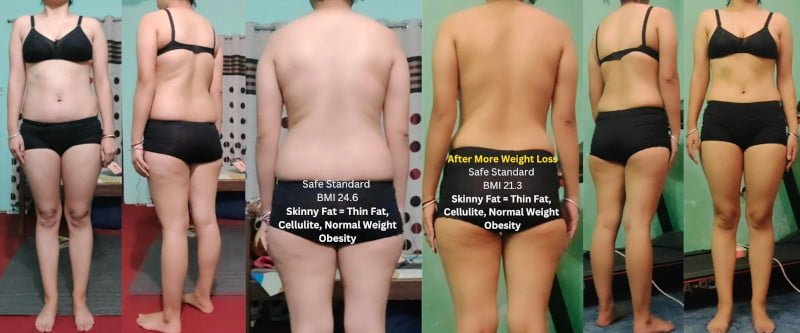
Our research (18) indicates that many individuals classified as having excess fat within normal‑weight BMI ranges — normal‑weight obesity, commonly referred to as skinny fat (19) — may instead possess measurably deficient total muscle tissue relative to a BT1. If validated by our MRI Study (20), this would mean their classification reflects a measurement blind spot, not excess adipose tissue or lifestyle behavior.
The fact remains: there is no standardized baseline phenotype for human muscular development. Scientifically establishing one would:
- Provide the missing measurement framework for classifying muscular variation
- Enable quantitative comparison of individuals to population baselines
- Support further research into total muscle tissue and muscular development
- Lead to the development of, and improve accuracy in, diagnosing deficient muscle (skinny fat)
- Eventually lead to the clarification of the true nature of skinny fat (normal‑weight obesity)
A standardized baseline phenotype is not merely a conceptual improvement — it is a foundational requirement for advancing measurement science, improving clinical classification, and resolving long‑standing blind spots in how human body composition is understood.
References
- NIH, National Library of Medicine: Methodological considerations for and validation of the ultrasonographic determination of human skeletal muscle hypertrophy and atrophy, January 6, 2021, Tanner Stokes, Thomas R Tripp, Kevin Murphy, Robert W Morton, Sara Y Oikawa, Hon Lam Choi, Jessica McGrath, Chris McGlory, Maureen J MacDonald, and Stuart M Phillips. https://pmc.ncbi.nlm.nih.gov/articles/PMC7786033/
- Nature, Scientific Reports: The reliability of the measurement of muscle volume using magnetic resonance imaging in typically developing infants by two raters, October 28, 2022, Georgia Whitta, Jessie Liang, N. Susan Stott, S. Ali Mirjalili, Malcolm Battin, and Sîan A. Williams. https://www.nature.com/articles/s41598-022-23087-y
- NIH, National Library of Medicine: Ultrasonographic assessment of human skeletal muscle size, January 2004, Neil D Reeves 1 , Constantinos N Maganaris, and Marco V Narici. https://pubmed.ncbi.nlm.nih.gov/14639480/
- NIH, National Library of Medicine: Reference Methods for Measuring Skeletal Muscle Mass: A Critical Perspective, January 19, 2026. Steven B Heymsfield, Houchun H Hu, Edvin Johanssen, Sophia Ramirez, Gabriela de Oliveira Lemos, Maria Cristina Gonzalez, Carla M Prado, and Jonathan P Bennett. https://pmc.ncbi.nlm.nih.gov/articles/PMC12816762/
- Britannica: human muscle system, Shane W. Cummings and Robin Huw Crompton (Fact-checked by the Editors of Encyclopaedia Britannica. https://www.britannica.com/science/human-muscle-system
- NIH, National Heart, Lung, and Blood Institute: Calculate Your BMI. https://www.nhlbi.nih.gov/calculate-your-bmi
- Skinny Fat Science: Lean Body Mass (LBM) and Skinny Fat, June 3, 2026. https://skinnyfat.fellowone.com/skinny-fat-science/lean-body-mass-lbm-and-skinny-fat/
- Skinny Fat Science: Low Muscle Mass, Skinny Fat, and How to Measure, December 10, 2025. https://skinnyfat.fellowone.com/skinny-fat-science/low-muscle-mass-skinny-fat-and-how-to-measure/
- Skinny Fat Science: How Skinny Fat Affects Metabolism, August 7, 2024. https://skinnyfat.fellowone.com/skinny-fat-science/how-skinny-fat-affects-metabolism/
- Skinny Fat Science: Skinny Fat Body Composition – Before & After Weight Loss, July 2, 2025. https://skinnyfat.fellowone.com/skinny-fat-science/skinny-fat-body-composition-before-after-weight-loss/
- Skinny Fat Science: How Skinny Fat Affects Body Shape, April 16, 2025. https://skinnyfat.fellowone.com/skinny-fat-science/how-skinny-fat-affects-body-shape/
- Skinny Fat Science: Is Muscle/Mass Genetic and How Does It Affect Skinny Fat?, November 20, 2024. https://skinnyfat.fellowone.com/skinny-fat-science/is-muscle-mass-genetic-and-how-does-it-affect-skinny-fat/
- Skinny Fat Science: The Best Skinny Fat Diet, According to Science, July 29, 2024. https://skinnyfat.fellowone.com/skinny-fat-science/the-best-skinny-fat-diet-according-to-science/
- Skinny Fat Science: Skinny Fat & Insulin Resistance, June 4, 2025. https://skinnyfat.fellowone.com/skinny-fat-science/skinny-fat-insulin-resistance/
- Skinny Fat Science: The Best Skinny Fat Exercise, According to Science, August 2, 2024. https://skinnyfat.fellowone.com/skinny-fat-science/the-best-skinny-fat-exercise-according-to-science/
- Skinny Fat Science: How Skinny Fat Affects Aging & Longevity, October 2, 2024. https://skinnyfat.fellowone.com/skinny-fat-science/how-skinny-fat-affects-aging-longevity/
- Skinny Fat Science: How the Skinny Fat Crisis Affects the Global Obesity Epidemic, September 25, 2024. https://skinnyfat.fellowone.com/skinny-fat-science/how-the-skinny-fat-crisis-affects-the-global-obesity-epidemic/
- Fellow One Research: Body Type Science Research Data. https://fellowone.com/category/fellow-one-research/the-four-body-types/body-type-science/body-type-quiz/research-data/
- Skinny Fat Science: What Is Skinny Fat?, Jul 26, 2024. https://skinnyfat.fellowone.com/skinny-fat-science/what-is-skinny-fat/
- Skinny Fat Science: Scientific Skinny Fat MRI Study – Proving What Skinny Fat Is, March 26, 2025. https://skinnyfat.fellowone.com/skinny-fat-science/scientific-skinny-fat-mri-study-proving-what-skinny-fat-is/
Was this article helpful?
Related Posts
What Is Skinny Fat?
How to Fix Skinny Fat

The Best Skinny Fat Diet, According to Science

Popular Concepts
- Skinny Fat: “Thin Fat”, Cellulite, and Deficient Muscle

- Lean Body Mass (LBM) and Skinny Fat
- What Body Fat Percentage Is Skinny Fat?
- Skinny Fat Body Composition – Before & After Weight Loss
- Skinny Fat & Insulin Resistance
- Body Dysmorphia and Skinny Fat Including Anorexia & Other Eating Disorders
- How Skinny Fat Affects Body Shape
- Skinny Fat Is More Than Just Normal-Weight Obesity