Developing an Accurate Standardized Phenotype and Muscle Measurement Framework: Evolving Skinny Fat Science

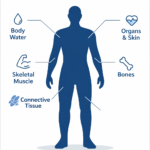
 Individuals do not begin life with identical biological structures or developmental trajectories. Science measures many things, but it has not yet established the integrated standardized baseline framework needed to interpret those measurements in the context of each individual’s underlying biological structure and development. Why are there so many different human body shapes/types and compositions? What role does genetics play in day-to-day life and the aging process? How do those things affect diet, exercise, lifestyle, and metabolism?
Why does this matter? Why are a standardized baseline phenotype and a standardized muscle measurement framework necessary when medicine already has an established anatomical model, body-composition measurements, biomarkers, clinical reference ranges, and increasingly powerful treatments?
Because without knowing the biological starting point of each individual, we cannot reliably and accurately distinguish what is normal variation between individuals, what represents a deviation from a biological reference, what has changed within an individual as they age, or why individuals with apparently similar clinical measurements can have substantially different bodies, metabolic characteristics, physical capacities, responses to interventions, and aging trajectories.
Developing an Accurate Standardized Phenotype and Muscle Measurement Framework: Evolving Skinny Fat Science
Current tools (1, 2) measure or modify individual components of human biology; they do not establish a standardized biological baseline for the underlying structure and development of the individual, or provide a standardized measurement framework to accurately measure, classify, and interpret those differences.
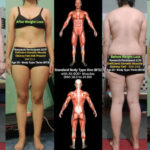
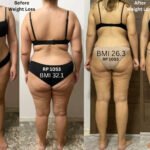
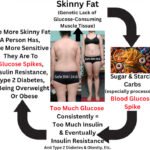
 How has your doctor determined your unique phenotype — body composition, shape, and physical capacity, no less? From birth, through childhood into adulthood, and now? Do you naturally, genetically (3) have deficient muscle (skinny fat)(4) compared to the baseline population average? If so, how deficient and how does that affect no less than your metabolism (5), body shape (6), and physical abilities, as well as diet (7), exercise (8), and lifestyle (9) choices? Maybe you have excess genetically influenced muscle. If that is the case, how does it affect all those things? If you are the baseline, what does that mean?
Right now, science and medicine cannot accurately answer those questions because no standard baseline phenotype or standardized muscle measurement framework exists. In our modern technological age, the best science and medicine can currently do is rough anatomical comparisons and inaccurate proxy estimates, which the mainstream seems to be doubling down on (10, 11, 12). This is because the last few decades of research have been heavily focused on cost-effective proxy measurements like DEXA, and, until recently, MRI costs were too inefficient and restraining to be considered as a gold standard muscle tissue measurement.
Times They Are Changing
DEXA is the gold standard for bone density measurement. It can estimate body fat, but how accurately is debatable. Those two variables are then used to calculate a lean body mass (LBM) (13) measurement, which is all body tissue minus body fat. But DEXA cannot (14) measure muscle tissue, let alone accurately. CT scans can more accurately measure muscle, but the exposure to dangerous radiation (14) is a very real concern. MRI is safe and highly accurate (14), and as costs continue to decrease, it becomes more universally accessible.
 In the universal scope of scientific research, it is estimated that annually in the United States, funding has crossed the one-trillion-dollar threshold (15, 16, 17). That is trillion, with a “t”. Our MRI Study (18) estimated budget is between $4 and $12 million dollars, depending on the cohort size, university chosen, and study protocol, no less. Thus, $12 million is 0.0012% of 1 trillion. That is significantly less than 1% of the total annual research allotment. Our 492-participant dataset (19) provides a proof-of-concept foundation, but the MRI Study (18) is required to take our research to the next necessary step.
References
- Skinny Fat Science: Why Is There No Standardized Baseline Phenotype to Understand Muscle Deficiency (Skinny Fat)?, September 23, 2026. https://skinnyfat.fellowone.com/skinny-fat-science/why-is-there-no-standardized-baseline-phenotype-to-understand-muscle-deficiency-skinny-fat/
- Skinny Fat Science: The Importance of a Standardized Baseline Phenotype to Determine Deficient Muscle (Skinny Fat), September 9, 2026. https://skinnyfat.fellowone.com/skinny-fat-science/the-importance-of-a-standardized-baseline-phenotype-to-determine-deficient-muscle-skinny-fat/
- Skinny Fat Science: Is Muscle/Mass Genetic and How Does It Affect Skinny Fat?, November 20, 2024. https://skinnyfat.fellowone.com/skinny-fat-science/is-muscle-mass-genetic-and-how-does-it-affect-skinny-fat/
- Skinny Fat Science: What is Skinny Fat?, July 26, 2024. https://skinnyfat.fellowone.com/skinny-fat-science/what-is-skinny-fat/
- Skinny Fat Science: How Skinny Fat Affects Metabolism, August 7, 2024. https://skinnyfat.fellowone.com/skinny-fat-science/how-skinny-fat-affects-metabolism/
- Skinny Fat Science: How Skinny Fat Affects Body Shape, April 16, 2025. https://skinnyfat.fellowone.com/skinny-fat-science/how-skinny-fat-affects-body-shape/
- Skinny Fat Science: The Best Skinny Fat Diet, According to Science, July 29, 2024. https://skinnyfat.fellowone.com/skinny-fat-science/the-best-skinny-fat-diet-according-to-science/
- Skinny Fat Science: The Best Skinny Fat Exercise, According to Science, August 2, 2024. https://skinnyfat.fellowone.com/skinny-fat-science/the-best-skinny-fat-exercise-according-to-science/
- Skinny Fat Science: The Best Skinny Fat Lifestyle, According to Science, August 14, 2024. https://skinnyfat.fellowone.com/skinny-fat-science/the-best-skinny-fat-lifestyle-according-to-science/
- NIH, National Library of Medicine: The authors reply: Letter on: “Pitfalls in the measurement of muscle mass: a need for a reference standard” by Clark et al., January 29, 2019, Fanny Buckinx, Francesco Landi, Matteo Cesari, Roger A Fieding, Marjolein Visser, Klaus Engelke, Stefania Maggi, Elaine Dennison, Nasser M Al‐Daghri, Sophie Allepaerts, Jurgen Bauer, Ivan Bautmans, Maria‐Luisa Brandi, Olivier Bruyère, Tommy Cederholm, Francesca Cerreta, Antonio Cherubini, Cyrus Cooper, Alphonso Cruz‐Jentoft, Eugene McCloskey, Bess Dawson‐Hughes, Jean‐Marc Kaufman, Andrea Laslop, Jean Petermans, Jean‐Yves Reginster, René Rizzoli, Sian Robinson, Yves Rolland, Ricardo Rueda, Bruno Vellas, and John A Kanis. https://pmc.ncbi.nlm.nih.gov/articles/PMC6351670/
- NIH, National Library of Medicine: Pitfalls in the measurement of muscle mass: a need for a reference standard, January 19, 2018, Fanny Buckinx Francesco Landi, Matteo Cesari, Roger A Fielding, Marjolein Visser, Klaus Engelke, Stefania Maggi, Elaine Dennison, Nasser M Al‐Daghri, Sophie Allepaerts, Jurgen Bauer, Ivan Bautmans, Maria Luisa Brandi, Olivier Bruyère, Tommy Cederholm, Francesca Cerreta, Antonio Cherubini, Cyrus Cooper, Alphonso Cruz‐Jentoft, Eugene McCloskey, Bess Dawson‐Hughes, Jean‐Marc Kaufman, Andrea Laslop, Jean Petermans, Jean‐Yves Reginster, René Rizzoli, Sian Robinson, Yves Rolland, Ricardo Rueda, Bruno Vellas, and John A Kanis. https://pmc.ncbi.nlm.nih.gov/articles/PMC5879987/
- NIH, National Library of Medicine: Comment on: “Pitfalls in the measurement of muscle mass: a need for a reference standard” by Buckinx et al., January 24, 2019, Brian C Clark, Dallin Tavoian, Bret H Goodpaster, Peggy M Cawthon, Ross D Hansen, and Todd M Manini. https://pmc.ncbi.nlm.nih.gov/articles/PMC6351671/
- Skinny Fat Science: Lean Body Mass (LBM) and Skinny Fat, June 3, 2026. https://skinnyfat.fellowone.com/skinny-fat-science/lean-body-mass-lbm-and-skinny-fat/
- Skinny Fat Science: What Body Fat Percentage Is Skinny Fat?, July 16, 2025. https://skinnyfat.fellowone.com/skinny-fat-science/what-body-fat-percentage-is-skinny-fat/
- National Center for Science and Engineering Statistics (NCSES). 2026. U.S. R&D Totaled $937 Billion in 2023; Estimate for 2024 Indicates Further Increase to $993 Billion. NSF 26-314. Alexandria, VA: U.S. National Science Foundation. https://ncses.nsf.gov/pubs/nsf26314
- National Center for Science and Engineering Statistics (NCSES). 2025. U.S. Nonprofits Spent $31 Billion on R&D Activities in FY 2023. NSF 25-355. Alexandria, VA: U.S. National Science Foundation. https://ncses.nsf.gov/pubs/nsf25355
- Progressive Policy Institute: Trade Fact of the Week: U.S. R&D spending approaching $1 trillion per year, May 8, 2024, Ed Gresser. https://www.progressivepolicy.org/trade-fact-of-the-week-u-s-rd-spending-approaching-1-trillion-per-year/
- Skinny Fat Science: Scientific Skinny Fat MRI Study – Proving What Skinny Fat Is, May 26, 2025. https://skinnyfat.fellowone.com/skinny-fat-science/scientific-skinny-fat-mri-study-proving-what-skinny-fat-is/
- Fellow One Research: Body Type Science Research Data. https://fellowone.com/category/fellow-one-research/the-four-body-types/body-type-science/body-type-quiz/research-data/
Was this article helpful?
Related Posts
What Is Skinny Fat?
How to Fix Skinny Fat

The Best Skinny Fat Diet, According to Science

Popular Concepts
- Skinny Fat: “Thin Fat”, Cellulite, and Deficient Muscle

- Lean Body Mass (LBM) and Skinny Fat
- What Body Fat Percentage Is Skinny Fat?
- Skinny Fat Body Composition – Before & After Weight Loss
- Skinny Fat & Insulin Resistance
- Body Dysmorphia and Skinny Fat Including Anorexia & Other Eating Disorders
- How Skinny Fat Affects Body Shape
- Skinny Fat Is More Than Just Normal-Weight Obesity