Transforming Healthcare: Accurate Muscle Tissue Measurement, Baseline, and Identifying Deficient Muscle (Skinny Fat)
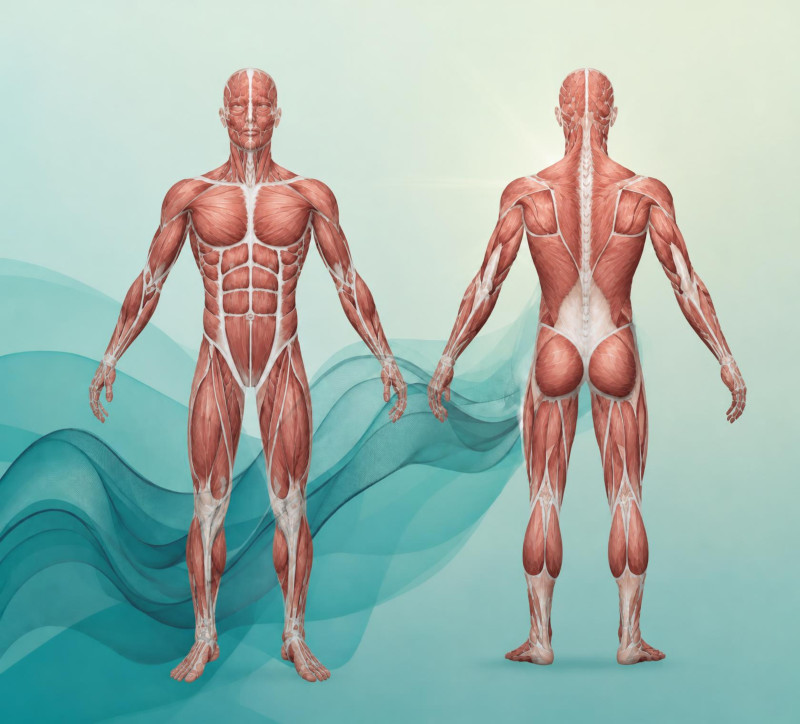
 Modern healthcare relies on accurate measurement. Blood pressure, cholesterol, blood glucose, and bone density are routinely measured using standardized methods and interpreted against established population reference ranges. These measurements support scientific research, predictive modeling, metabolic calculations, diagnosis, treatment decisions, and the burgeoning AI-driven health tools built upon them. Yet global healthcare systems have long operated without the ability to directly measure total human muscle tissue.
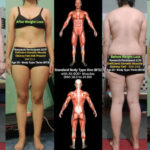
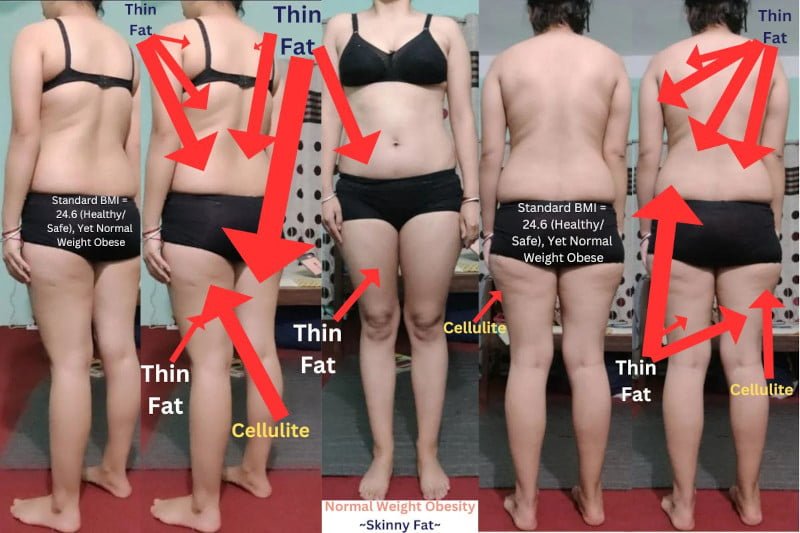
Despite technological advances in body-composition science, including MRI (1, 2), there is currently no standardized (3) framework for measuring total human muscle tissue, comparing those measurements to a population baseline, and determining whether an individual possesses an average, above-average, or below-average/deficient (skinny fat)(4) amount of muscle tissue. Our MRI Study (5) is working on a solution.
Instead, healthcare relies on indirect proxies such as BMI (4), body fat percentage, and lean body mass (LBM)(6). While useful for many purposes, these measurements were not designed to directly quantify total muscle tissue or determine where an individual falls relative to the broader population.
The Limitations of Current Metrics – Accurate Muscle Tissue Measurement, Baseline, and Identifying Deficient Muscle (Skinny Fat)
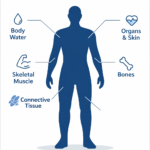
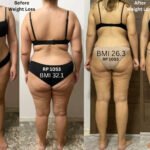
BMI measures weight relative to height (7) to estimate body fat, but it cannot distinguish between muscle and fat tissue. Two individuals can have identical BMI values while possessing dramatically different body compositions. Similarly, LBM does not directly measure muscle tissue. Instead, it is a composite of organs, connective tissue, and body water — all non-fat tissue — from which muscle is indirectly estimated.
 As a result, these commonly used metrics do not offer accurate muscle tissue measurement, nor do they directly answer how much muscle tissue an individual possesses compared to the baseline human population. Consequently, individuals may be assessed and managed using incomplete or indirect information. In a healthcare system where diagnostic errors (8, 9, 10, 11, 12, 13) affect millions of patients each year, reliance on proxy measurements contributes to misclassification, inappropriate interventions, and missed opportunities to identify underlying physiological and mental health problems.
Muscle tissue plays a central role in human physiology, influencing metabolism, glucose regulation, physical function, and healthy aging, at a minimum. However, knowing that an individual possesses a specific amount of muscle tissue is only half the battle; knowing whether that amount is average, above average, or measurably below average in relation to the broader population is vital to better understanding each person’s overall health—physically, mentally, emotionally, and spiritually (14).
A New Measurement Infrastructure
MRI (15, 5) provides high-resolution visualization of soft tissues without exposing participants to ionizing radiation. A standardized MRI-based measurement framework can quantify total muscle tissue and establish population reference distributions for interpretation. The challenge is not simply generating images; it is creating a measurement infrastructure that allows researchers to compare individuals against a standardized baseline. Only then can muscle tissue be classified in a meaningful and reproducible way.
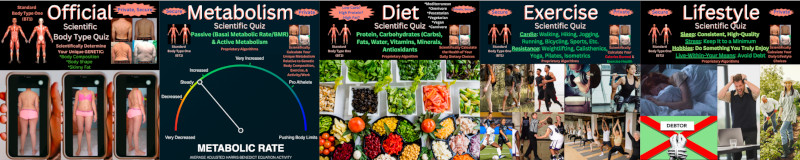
By establishing accurate methods for measuring total muscle tissue, we will be able to validate and improve our proposed Body Type Science (BT1–BT4) Theory (16) framework for human phenotyping, as well as calibrate and refine our Scientific Health Quizzes for body-composition assessment. As healthcare evolves from indirect proxies and estimation toward direct measurement, health assessments and diagnoses can become more accurate as individuals gain a better understanding of their unique bodies, body composition, and overall health. Accurately measuring and comprehending total muscle tissue represents the next major frontier in precision health and body-composition science.
References
- NIH, National Library of Medicine: MRI adipose tissue and muscle composition analysis—a review of automation techniques, July 19, 2018, Magnus Borga. https://pmc.ncbi.nlm.nih.gov/articles/PMC6223175/ 1,
- Nature > Communications Medicine: Comparing DXA and MRI body composition measurements in cross-sectional and longitudinal cohorts, March 5, 2026, Nicolas Basty, Marjola Thanaj, Brandon Whitcher, Jimmy D. Bell, and E. Louise Thomas. https://www.nature.com/articles/s43856-026-01440-w
- NIH, National Library of Medicine: Reference Methods for Measuring Skeletal Muscle Mass: A Critical Perspective, January 19, 2026, Steven B Heymsfield, Houchun H Hu, Edvin Johanssen, Sophia Ramirez, Gabriela de Oliveira Lemos, Maria Cristina Gonzalez, Carla M Prado, and Jonathan P Bennett. https://pmc.ncbi.nlm.nih.gov/articles/PMC12816762/
- Skinny Fat Science: What Is Skinny Fat?, July 26, 2024. https://skinnyfat.fellowone.com/skinny-fat-science/what-is-skinny-fat/
- Skinny Fat Science: Scientific Skinny Fat MRI Study – Proving What Skinny Fat Is, March 26, 2025. https://skinnyfat.fellowone.com/skinny-fat-science/scientific-skinny-fat-mri-study-proving-what-skinny-fat-is/
- Skinny Fat Science: Lean Body Mass (LBM) and Skinny Fat, June 3, 2026. https://skinnyfat.fellowone.com/skinny-fat-science/lean-body-mass-lbm-and-skinny-fat/
- NIH, National Heart, Lung, and Blood Institute: Calculate Your BMI. https://www.nhlbi.nih.gov/calculate-your-bmi
- NIH, National Library of Medicine: Missed diagnosis—a major barrier to patient access to obesity healthcare in the primary care setting, April 22, 2024, Michal Kasher Meron, Sapir Eizenstein, Tali Cukierman-Yaffe, and Dan Oieru. https://pmc.ncbi.nlm.nih.gov/articles/PMC11216998/
- Freedland Harwin Gander Valori: Staggering U.S. Misdiagnosis Statistics in Healthcare, May 5, 026, Daniel Harwin. https://www.fhvlegal.com/blog/staggering-u-s-diagnostic-error-statistics-july-2024/
- NIH, National Library of Medicine: The frequency of diagnostic errors in outpatient care: estimations from three large observational studies involving US adult populations, September 2014, Hardeep Singh, Ashley N D Meyer, and Eric J Thomas. https://pubmed.ncbi.nlm.nih.gov/24742777/
- NIH, National Library of Medicine: Accuracy of Body Mass Index to Diagnose Obesity In the US Adult Population, May 27, 2010, Abel Romero-Corral, Virend K Somers, Justo Sierra-Johnson, Randal J Thomas, Kent R Bailey, Maria L Collazo-Clavell, Thomas G Allison, Josef Korinek, John A Batsis, and Francisco Lopez-Jimenez. https://pmc.ncbi.nlm.nih.gov/articles/PMC2877506/
- NIH, National Library of Medicine: The WHO BMI System Misclassifies Weight Status in Adults from the General Population in North Italy: A DXA-Based Assessment Study (18–98 Years), June 19, 2025, Chiara Milanese, Leila Itani, Valentina Cavedon, and Marwan El Ghoch. https://pmc.ncbi.nlm.nih.gov/articles/PMC12252079/
- MedicalXpress: BMI classification system wrongly identifies some people as having overweight or obesity, says study, March 27, 2026, European Association for the Study of Obesity (Edited by Stephanie Baum, reviewed by Robert Egan). https://medicalxpress.com/news/2026-03-bmi-classification-wrongly-people-overweight.html
- University of Virginia, School of Medicine > Division of Perceptual Studies: Publications. https://med.virginia.edu/perceptual-studies/publications/
- Wikipedia: Magnetic resonance imaging. https://en.wikipedia.org/wiki/Magnetic_resonance_imaging
- Fellow One Research: Body Type Science Research Data. https://fellowone.com/category/fellow-one-research/the-four-body-types/body-type-science/body-type-quiz/research-data/
Was this article helpful?
Related Posts
What Is Skinny Fat?
How to Fix Skinny Fat

The Best Skinny Fat Diet, According to Science

Popular Concepts
- Skinny Fat: “Thin Fat”, Cellulite, and Deficient Muscle

- Lean Body Mass (LBM) and Skinny Fat
- What Body Fat Percentage Is Skinny Fat?
- Skinny Fat Body Composition – Before & After Weight Loss
- Skinny Fat & Insulin Resistance
- Body Dysmorphia and Skinny Fat Including Anorexia & Other Eating Disorders
- How Skinny Fat Affects Body Shape
- Skinny Fat Is More Than Just Normal-Weight Obesity