Why a Skinny-Fat-Focused Dataset Matters

Without a skinny-fat-focused dataset (1), how do we really understand skinny fat? Take the 2026 Spanish research study (2), which examined normal-weight obesity (NWO)(3), commonly referred to as skinny fat, in 12,874 adults aged 22–30. Let’s consider that study through the story of the three little pigs.
 The study does not account for genetics. It does not establish each participant’s biological starting point relative to a standardized baseline phenotype. It does not know how much total muscle tissue each participant originally developed genetically, how much they have today, or how much they may have lost over time. And there is no established population-referenced baseline for total muscle tissue against which such a direct measurement can be compared.
Then correlate that to the three little pigs. Each pig builds a house (human body) using different materials (genetics). The first builds with straw (severely limited genetically influenced muscle development). The second builds with sticks (limited genetically influenced muscle development). The third builds with bricks (fully developed genetically influenced muscle).
Why a Skinny-Fat-Focused Dataset Matters
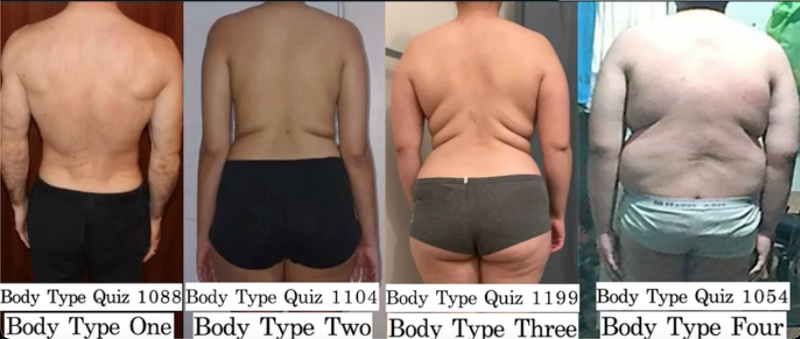 The materials used matter. They determine the original structural composition (skeleton, vertebrae, muscles, etc.) and shape of each house and influence its ability to withstand external influences. The same principle applies to the human body. What your body is made of from the beginning matters.
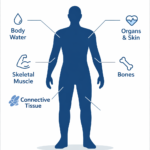
Yet that research study has no way of knowing what each participant’s body was originally made of, or what it’s made of today. What it has are BMI (3) measurements to estimate body fat (regular white/yellow adipose tissue), calculated from height and weight, as well as lean body mass (LBM)(4), a composite measure of all non-fat body tissue. Neither of those indirect proxy measures establishes how much total muscle tissue an individual actually has or ever had. No direct total muscle measurements were taken, and genetics were not even considered.
Instead, the study assumes that participants can be accurately evaluated without knowing their individual biological starting points or accounting for potentially significant differences in their original or current body composition. There is no established scientific research supporting that assumption. Nevertheless, the entire study is based on that false assumption.
Lacking a Skinny-Fat-Focused Dataset
The story of the three little pigs illustrates why a biological starting point and structural composition matter. Each pig started with different building materials, resulting in houses with very different structural characteristics and capacities. The house made of bricks is clearly the strongest—healthiest—in the story.
 The human body is no different. Genetics directly influences skeletal and muscle development, establishing an individual’s biological starting point. What that starting point is matters when evaluating structural development, current body composition, shape, metabolism, subsequent changes over time, and overall health.
Yet that 2026 study doesn’t know how much muscle each participant originally developed genetically. It doesn’t know how much muscle tissue they have today. And it doesn’t know how much muscle may have been lost over time through diet, exercise, lifestyle, and/or aging. It cannot establish how those differences influence BMI, LBM, or each participant’s health. Moreover, it fails to account for the known limitations (5, 3) of the current normal-weight obesity classification.
The Moral of The Story
Without knowing the original construction (genetics) of each participant’s “house” (body), researchers cannot determine how much structural material was originally present, particularly in terms of muscle and fat, how much has deteriorated, or how the remaining structure compares to its original condition. It is the same as examining three houses many years after construction and using inaccurate proxy measures to determine their strength and durability—health—without knowing what materials they were originally built with, but assuming they are all generally built the same. When we know they are not. Yet, still attempting to draw “scientific” conclusions about the overall health of all three houses relative to such false assumptions.
This is precisely why a skinny-fat-focused dataset matters.
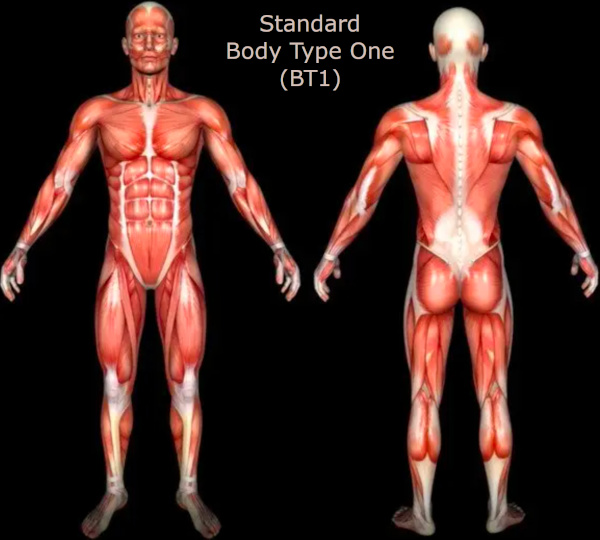
To understand skinny fat, researchers first need a standardized baseline phenotype, direct measurement of total muscle tissue, and population-referenced baseline data. Without those foundational reference points, science cannot adequately distinguish individuals who, at birth, naturally (genetically) develop less muscle, to whatever degree, from those who naturally develop more muscle, to whatever degree. Nor how much muscle was subsequently lost (or added) over time, for whatever reason(s). Without understanding these differences, does that 2026 dataset have any real value or use at all? The fact is, we can accurately build a skinny-fat-focused dataset to properly investigate what skinny fat actually is and what it means for human health. Our MRI Study (6) is the solution.
References
- Skinny Fat Science: Existing Skinny Fat Datasets?, October 29, 2026. https://skinnyfat.fellowone.com/skinny-fat-science/existing-skinny-fat-datasets/
- NIH, National Library of Medicine: Normal-weight obesity syndrome: diagnosis, prevalence, and clinical implications, September 2016 (Epub Jul 29, 2016), Lana P Franco, Carla C Morais, Cristiane Cominetti. https://pubmed.ncbi.nlm.nih.gov/27473199/
- Skinny Fat Science: What Is Skinny Fat?, July 26, 2024. https://skinnyfat.fellowone.com/skinny-fat-science/what-is-skinny-fat/
- Skinny Fact Science: Lean Body Mass (LBM) and Skinny Fat, June 3, 2026. https://skinnyfat.fellowone.com/skinny-fat-science/lean-body-mass-lbm-and-skinny-fat/
- Skinny Fat Science: Skinny Fat is a Lack of Genetic Muscle – Beyond Normal-Weight Obesity, August 13, 225. https://skinnyfat.fellowone.com/skinny-fat-science/skinny-fat-is-a-lack-of-genetic-muscle-beyond-normal-weight-obesity/
- Skinny Fact Science: Scientific Skinny Fat MRI Study – Proving What Skinny Fat Is, March 26, 2025. https://skinnyfat.fellowone.com/skinny-fat-science/scientific-skinny-fat-mri-study-proving-what-skinny-fat-is/
Was this article helpful?
Related Posts
What Is Skinny Fat?
How to Fix Skinny Fat

The Best Skinny Fat Diet, According to Science

Popular Concepts
- Skinny Fat: “Thin Fat”, Cellulite, and Deficient Muscle

- Lean Body Mass (LBM) and Skinny Fat
- What Body Fat Percentage Is Skinny Fat?
- Skinny Fat Body Composition – Before & After Weight Loss
- Skinny Fat & Insulin Resistance
- Body Dysmorphia and Skinny Fat Including Anorexia & Other Eating Disorders
- How Skinny Fat Affects Body Shape
- Skinny Fat Is More Than Just Normal-Weight Obesity