Why Do I Have Low Muscle Mass? Skinny Fat Question
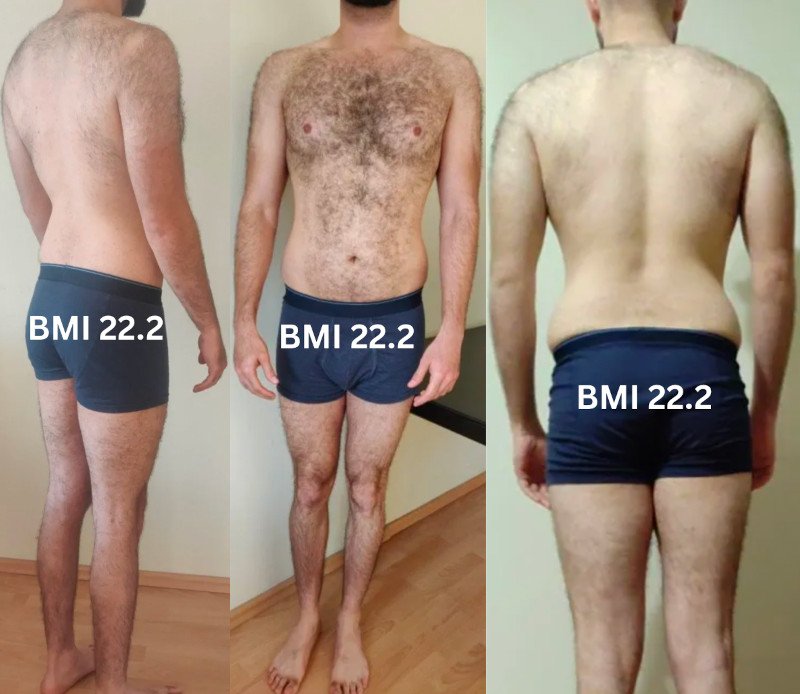
 Marhaba (Hello). I am 24 years old, 5’11”, and 159 pounds. My BMI is 22.2. I have become more aware lately of my low muscle mass. I have been working hard in the gym lifting weights, 90 minutes per day, 5 days a week. Compared to some of my friends, I have wondered for a while if it’s more difficult for me to add muscle mass.
I follow the same diet and supplements as my friends, and I make sure I am getting enough quality sleep each night. My diet, exercise, and lifestyle are healthy, confirmed by my doctor and your Scientific Health Quizzes, including the Scientific Body Type Quiz that informed me I am experiencing skinny fat — a lack of genetic muscle in the form of thin fat. My doctor said my muscle is normal. Yet, the same friends I weightlift with in the gym, they gain muscle easily, while I struggle.
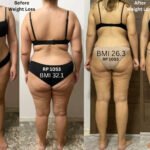
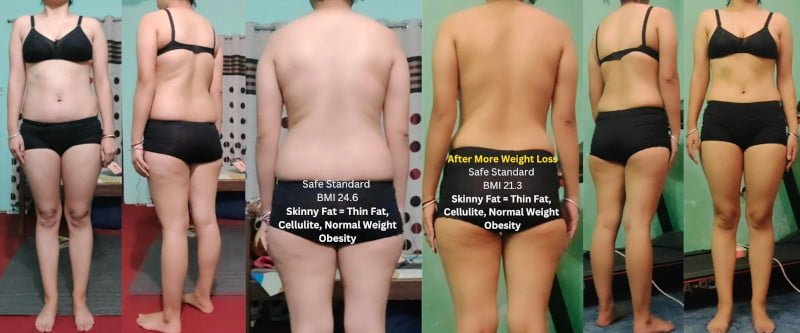
After reading your site, it seems that genetics plays a larger role than I anticipated. Everyone tells me genetics is just an excuse. I hear this all the time on social media. But, genetics is the only explanation that explains why I do the same weight lifting routine, same diet, and same supplements, while doing better with my sleep and lifestyle in general, yet my friends see amazing results as I struggle. Just look at my photos. That is nearly three months of hard work. I lost fat weight, so I am happy about that. Are my genetics really that bad?
Why Do I Have Low Muscle Mass? Skinny Fat Question
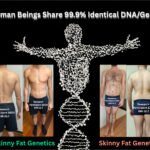
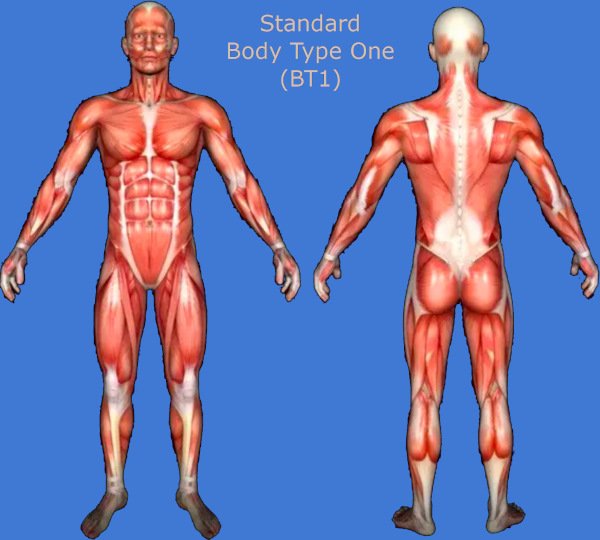 Every human body is genetically unique. Some people are genetically blessed with fully developed muscle tissue and mass (1), including an optimal muscle fiber ratio that allows them to easily maintain muscle tissue and build muscle mass. This type of body is scientifically known as a Standard Body Type One (BT1) with all 600+ muscles fully developed, found in any scientifically approved resource like Britannica (2).
Whereas, other people, like you, experience less than optimal muscle genetics and have to work harder to achieve the muscle gains you want. Your genetics are simply different. The key is understanding how your genetics are different and how this affects your metabolism, diet, exercise, and lifestyle. The diet that works best for your friends may not work best for your unique body. Thus, following their exact exercise, diet, and supplement routines may not yield the same results, as your experience has shown.
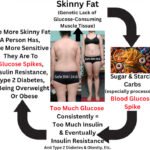
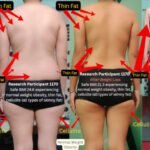
Body composition science is young, including the science of skinny fat. Your doctor has no way to measure genetic muscle tissue, nor any average to compare it to — they do not know/are making a gross assumption (our MRI Study (14) is working on a solution). Science is not even sure at this time what thin fat tissue (3) is (nor cellulite) exactly, and why it replaces genetic muscle tissue. Your Scientific Body Type Quiz results and images indicate that you are experiencing thin fat tissue where genetically you should have muscle tissue. You are within a safe BMI at 22.2, and by definition you do not have any excess regular white/yellow body fat. Yet, you have obvious thin fat tissue (skinny fat) on your midriff/abdomen/belly, upper chest/pectoral/breast, lower side trunk/love handles, and lower back, at least, where you should genetically have muscle tissue but do not.
How to Fix Skinny Fat
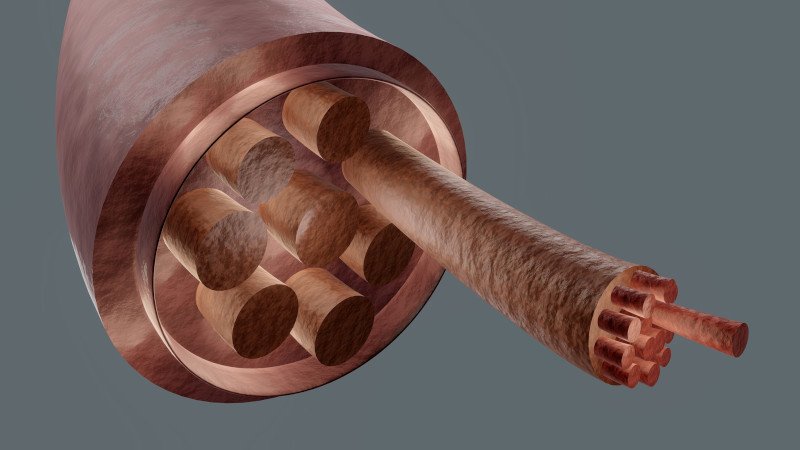
Understanding your unique muscle fiber ratio (type I vs. type II) helps, although this is easier said than done. The standard measure is the Bergström needle biopsy (4, 5, 6), which is neither cheap nor readily accessible, unless you have stellar health insurance and a doctor who sees the value in knowing your muscle fiber ratio. Even then, three separate biopsies (7) are recommended to get an accurate measure. MRI machines can also measure (8, 9) muscle fiber ratio (non-invasively), but again, they are not cheap or reasonably accessible, and the technology is so new that accuracy is still debatable. With your own experience in the gym, it is likely your muscle fiber ratio is less than optimal.
However, optimizing your metabolism (10), diet (11), exercise (12), and lifestyle (including stress)(13) routines relative to your specific genetics can help mitigate things as much as possible. As you mentioned, you have a reliable sleep routine, and getting consistent quality slumber is a solid start. In terms of diet, figuring out which protein(s) your body assimilates best is key, along with high-quality fats (like extra-virgin olive oil) and fiber carbs. Don’t just blindly follow your friend’s routines. Experiment with different proteins, animal and vegetable, and overall meals to see what works best for your unique body. If need be, speak to a qualified nutritionist for proper advice.
As for your weightlifting workout routine, again, what works for your friends may not work best for you. Experiment with more weight and less weight, more reps and less reps, maxing out, and the like. Speak to a qualified professional trainer who understands the nuances of body composition, particularly the importance of genetics and what skinny fat really is. Keep in mind, any muscle mass you add via weight training, you will have to maintain for the rest of your life, or you will gradually lose it and eventually return to your original genetic body composition. Adding muscle mass and body recomposition are not permanent.
Why Do I Have Low Muscle Mass? Tracking Progress with the Scientific Health Quizzes
As you mentioned, you have already taken some of the Scientific Health Quizzes to get a real sense of things. As you wrangle your genetics and figure out the best diet, exercise, and lifestyle for your unique body, the Quizzes can help you track your progress. Each Quiz is organized in your free, private, secure account so you can see how things have changed since your last Quiz.
Whether it is your metabolism, diet, exercise, lifestyle, and/or body composition, you can accurately monitor your results and progress. Free options are available, and there is an affiliate option. Questions are welcome in the comments below.

Resources
- Skinny Fat Science: Is Muscle/Mass Genetic and How Does It Affect Skinny Fat?, November 20, 2024. https://skinnyfat.fellowone.com/skinny-fat-science/is-muscle-mass-genetic-and-how-does-it-affect-skinny-fat/
- Britannica: human muscle system, Shane W. Cummings and Robin Huw Crompton (Fact-checked by the Editors of Encyclopaedia Britannica. https://www.britannica.com/science/human-muscle-system
- Skinny Fat Science: What Is Skinny Fat?, July 26, 2024. https://skinnyfat.fellowone.com/skinny-fat-science/what-is-skinny-fat/
- NIH, National Library of Medicine: Suction-modified Bergström muscle biopsy technique: experience with 13,500 procedures, April 1, 2011, Mark A Tarnopolsky, Erin Pearce, Katelyn Smith, and Boleslaw Lach. https://pubmed.ncbi.nlm.nih.gov/21462204/
- NIH, National Library of Medicine: Prediction of muscle fiber composition using multiple repetition testing, October 22, 2020, Elliott CR Hall, Evgeny A Lysenko, Ekaterina A Semenova, Oleg V Borisov, Oleg N Andryushchenko, Liliya B Andryushchenko, Tatiana F Vepkhvadze, Egor M Lednev, Piotr Zmijewski, Daniil V Popov, Edward V Generozov, and Ildus I Ahmetov. https://pmc.ncbi.nlm.nih.gov/articles/PMC8139349/
- NIH, National Library of Medicine: Human skeletal muscle biopsy procedures using the modified Bergström technique, September 10, 2014, R Andrew Shanely, Kevin A Zwetsloot, N Travis Triplett, Mary Pat Meaney, Gerard E Farris, and David C Nieman. https://pubmed.ncbi.nlm.nih.gov/25285722/
- American Physiological Society, Journal of Applied Physiology: Does one biopsy cut it? Revisiting human muscle fiber type composition variability using repeated biopsies in the vastus lateralis and gastrocnemius medialis, 2024, Volume 137, Issue 5, Freek Van de Casteele, Ruud Van Thienen, Oscar Horwath William Apró, Thibaux Van der Stede, Marcus Moberg, Eline Lievens, and Wim Derave. https://journals.physiology.org/doi/full/10.1152/japplphysiol.00394.2024
- NIH, National Library of Medicine: Noninvasive technique to evaluate the muscle fiber characteristics using q-space imaging, April 4, 2019, Junichi Hata, Daisuke Nakashima, Osahiko Tsuji, Kanehiro Fujiyoshi, Kaori Yasutake, Yasushi Sera, Yuji Komaki, Keigo Hikishima, Takeo Nagura, Morio Matsumoto, Hideyuki Okano, and Masaya Nakamura. https://pmc.ncbi.nlm.nih.gov/articles/PMC6449066/
- Science Direct: Magnetic resonance imaging techniques for the quantitative analysis of skeletal muscle: State of the art, September 2023, Volume 42, Pages 57-72, Klaus Engelke, Oliver Chaudry, Lena Gast, Mootaz AB. Eldib, Ling Wang, Jean-Denis Laredo, Georg Schett, and Armin M. Nagel. https://www.sciencedirect.com/science/article/pii/S2214031X23000530
- Skinny Fat Science: How Skinny Fat Affects Metabolism, August 7, 2024. https://skinnyfat.fellowone.com/skinny-fat-science/how-skinny-fat-affects-metabolism/
- Skinny Fat Science: The Best Skinny Fat Diet, According to Science, July 29, 2024, https://skinnyfat.fellowone.com/skinny-fat-science/the-best-skinny-fat-diet-according-to-science/
- Skinny Fat Science: The Best Skinny Fat Exercise, According to Science, August 2, 2024. https://skinnyfat.fellowone.com/skinny-fat-science/the-best-skinny-fat-exercise-according-to-science/
- Skinny Fat Science: The Best Skinny Fat Lifestyle, According to Science, August 14, 2024. https://skinnyfat.fellowone.com/skinny-fat-science/the-best-skinny-fat-lifestyle-according-to-science/
- Skinny Fat Science: Scientific Skinny Fat MRI Study – Proving What Skinny Fat Is, March 26, 2025. https://skinnyfat.fellowone.com/skinny-fat-science/scientific-skinny-fat-mri-study-proving-what-skinny-fat-is/
Was this article helpful?
Related Posts
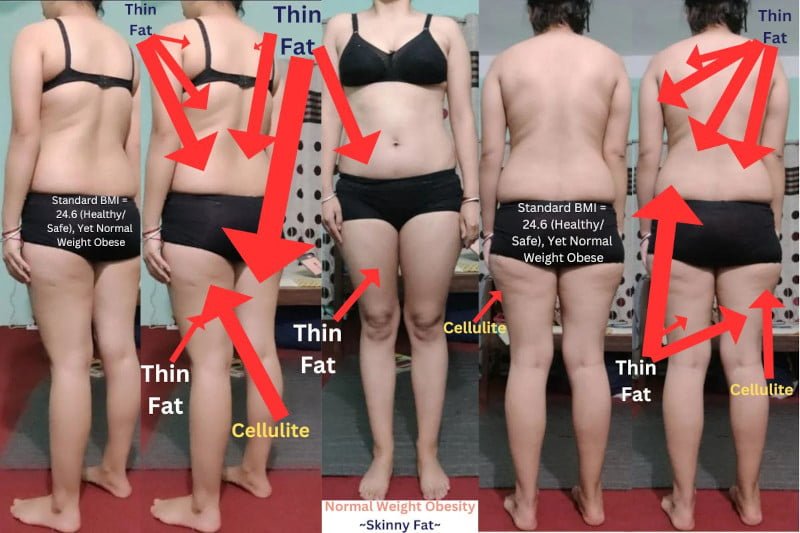
What Is Skinny Fat?
How to Fix Skinny Fat

The Best Skinny Fat Diet, According to Science

Popular Concepts
- What Body Fat Percentage Is Skinny Fat?

- Skinny Fat Body Composition – Before & After Weight Loss
- Skinny Fat Genetics, Race DNA, and Muscle Tissue
- Skinny Fat & Insulin Resistance
- Body Dysmorphia and Skinny Fat Including Anorexia & Other Eating Disorders
- How Skinny Fat Affects Body Shape
- Skinny Fat Is More Than Just Normal-Weight Obesity