Signs You Are Skinny Fat

 What are the main signs you are experiencing skinny fat? Low muscle tissue is the key red flag. The less muscle you have, the slower your metabolism. And the more it negatively affects your body shape. Not to mention its effects on athleticism, diet, exercise, lifestyle, self-confidence, and overall health.
How can you measure your muscle tissue to determine if you are below average (low)? Is there an accurate way to calculate your metabolism to identify if yours is slow? What about identifying how skinny fat affects diet, exercise, and lifestyle health, along with athleticism and self-confidence?
Signs You Are Skinny Fat – What is Low Muscle Tissue?
What is the easiest way to measure muscle tissue to determine if you’re average, above average, or below average (skinny fat)? In 2026, you would think there is an accurate technology that allows for such an important measurement. However, the fact is, no measurement exists at this time. Lean body mass (LBM) is the current estimate that is widely used. But it does not measure actual muscle tissue. It only indicates (1, 2, 3) the total weight of a person’s body minus all fat mass — LBM comprises muscle, bones, organs, and water.
 What is needed is a total genetic muscle tissue measurement. As well as an average to compare it to. Our MRI Study (4) is working on solutions. Moreover, we need a way to measure muscle mass added via resistance/exercise. And any muscle mass lost due to diet, exercise, and lifestyle, along with aging (sarcopenia).
Once we have the data and those accurate measurements, doctors will be able to officially diagnose skinny fat and offer patients accurate muscle tissue measurements. We will then be able to develop and hone a technology that allows the average person to conveniently measure their unique muscle tissue, and any skinny fat. No different than a weight scale or other similar device currently found in the typical home. And one day, something as simple as an app on your smartphone.
Athleticism and Self-Confidence -Signs You Are Skinny Fat
Muscle directly affects the structure and shape of the human body. Some people are genetically born with more muscle, some less. Just as, thanks to genetics, some people easily add muscle mass, while others — not so much.
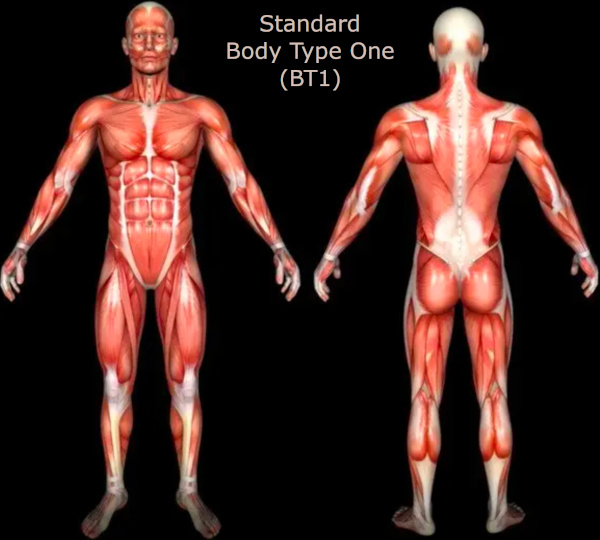 Being able to accurately measure genetic muscle tissue, or lack of (skinny fat), will help each person understand why their body is the specific shape it is and what they can do realistically about it. Which, in turn, will help mitigate the festering mental health crisis (5, 6) and improve self-confidence, especially among young people who are abusing their body so they can achieve the “ideal look”. Right now, the “average” human body – IE the “ideal look” — is the Standard Body Type One (BT1)(7) found in any scientifically approved human anatomy book.
But, the truth is, there are countless human body shapes thanks to genetics and muscle tissue (8, 9), no less. Moreover, how much muscle a person naturally, genetically has, and how easily they can add muscle mass, directly affects their athletic ability, at least. Some people are born to professional athletes; it’s in their genes. Most are not – no matter how hard they work. This is why significantly less than 1% (10) of the entire global population is a pro athlete. Despite the nonsense on social media and the like, genetics matter and are not an excuse.
Accurately Determining Metabolism (Slow, Average, Fast) and Metabolic Rate (Decreased, Steady, Increased) – Diet, Exercise, Lifestyle
In terms of accurately calculating metabolism and metabolic rate, we have wrangled the latest science and developed the Scientific Metabolism Quiz. A comprehensive set of variables — including work activity, exercise (cardio and resistance), body composition, age, diet, and a wide spectrum of lifestyle data points — are reckoned via proprietary algorithms to offer the most accurate summary of your unique metabolic state. Each Quiz result is securely and privately stored in your free account. You can easily and quickly take as many Quizzes as you want over time to track changes.
As a compliment, we have also built the Scientific Health Quizzes suite — Scientific Body Type Quiz, Scientific Diet Quiz, Scientific Exercise Quiz, and Scientific Lifestyle Quiz. Free options are available. Understanding your health has never been easier.

References
- Wikipedia; Lean body mass. https://en.wikipedia.org/wiki/Lean_body_mass
- NIH, National Library of Medicine: Are Lean Body Mass and Fat-Free Mass the Same or Different Body Components? A Critical Perspective, Novembe 5, 2024. Steven B Heymsfield, Jasmine Brown, Sophia Ramirez, Carla M Prado, Grant M Tinsley, and Maria Cristina Gonzalez. https://pmc.ncbi.nlm.nih.gov/articles/PMC11625996/
- InBody USA; Lean Body Mass and Muscle Mass – What’s the Difference?, August 24, 2018. https://inbodyusa.com/blogs/inbodyblog/lean-body-mass-and-muscle-mass-whats-the-difference/
- Skinny Fat Science: Scientific Skinny Fat MRI Study – Proving What Skinny Fat Is, March 26, 2025. https://skinnyfat.fellowone.com/skinny-fat-science/scientific-skinny-fat-mri-study-proving-what-skinny-fat-is/
- Skinny Fat Science: How Skinny Fat Affects Mental Health, August 21, 2024. https://skinnyfat.fellowone.com/skinny-fat-science/how-skinny-fat-affects-mental-health/
- Skinny Fat Science: Does Starving Fix Skinny Fat?Does Starving Fix Skinny Fat?, October 21, 2025. https://skinnyfat.fellowone.com/skinny-fat-science/does-starving-fix-skinny-fat/
- Britannica: human muscle system, Shane W. Cummings and Robin Huw Crompton (Fact-checked by the Editors of Encyclopaedia Britannica. https://www.britannica.com/science/human-muscle-system
- Skinny Fat Science: Is Muscle/Mass Genetic and How Does It Affect Skinny Fat?, November 20, 2024. https://skinnyfat.fellowone.com/skinny-fat-science/is-muscle-mass-genetic-and-how-does-it-affect-skinny-fat/
- Skinny Fat Science: Is Skinny Fat Genetic?, November 27, 2024. https://skinnyfat.fellowone.com/skinny-fat-science/is-skinny-fat-genetic/
- The Academic Athlete: The Statistics. https://www.theacademicathlete.org/the-statistics
Was this article helpful?
Related Posts
What Is Skinny Fat?
How to Fix Skinny Fat
The Best Skinny Fat Diet, According to Science

Popular Concepts
- What Body Fat Percentage Is Skinny Fat?

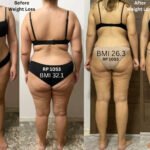
- Skinny Fat Body Composition – Before & After Weight Loss
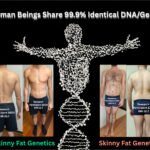
- Skinny Fat Genetics, Race DNA, and Muscle Tissue
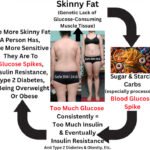
- Skinny Fat & Insulin Resistance
- Body Dysmorphia and Skinny Fat Including Anorexia & Other Eating Disorders
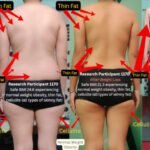
- How Skinny Fat Affects Body Shape
- Skinny Fat Is More Than Just Normal-Weight Obesity