How Skinny Fat Affects Healthcare

With healthcare costs on the rise, understanding the effects of skinny fat can help reduce expenses while improving overall health. Skinny fat is low muscle tissue (1, 2). Muscle tissue is genetic (3, 4). Muscle cannot (5) turn into fat, nor can fat turn into muscle. No matter how hard you work in the gym or what anyone says on social media.
It is a genetic fact that some people are born with more muscle tissue, and some less. Just as genetics play a main role in how easy or how hard it is for you to add muscle mass and maintain it. Muscle directly influences metabolism (6). This, in turn, directly affects how your body processes glucose (7) from the food and drink you consume. More muscle requires more glucose (calories/energy). The less muscle you have (skinny fat), the fewer calories (glucose) your body consumes, and the more prone you are to insulin resistance, type 2 diabetes, being overweight, and obesity.
The healthier your diet, exercise, and lifestyle, the more likely it is that you will avoid insulin resistance, type 2 diabetes, being overweight (too much regular white/yellow body fat), and obesity (way too much body fat), at least. Which generally equates to being healthier, lowering overall healthcare costs.
How Skinny Fat Affects Healthcare
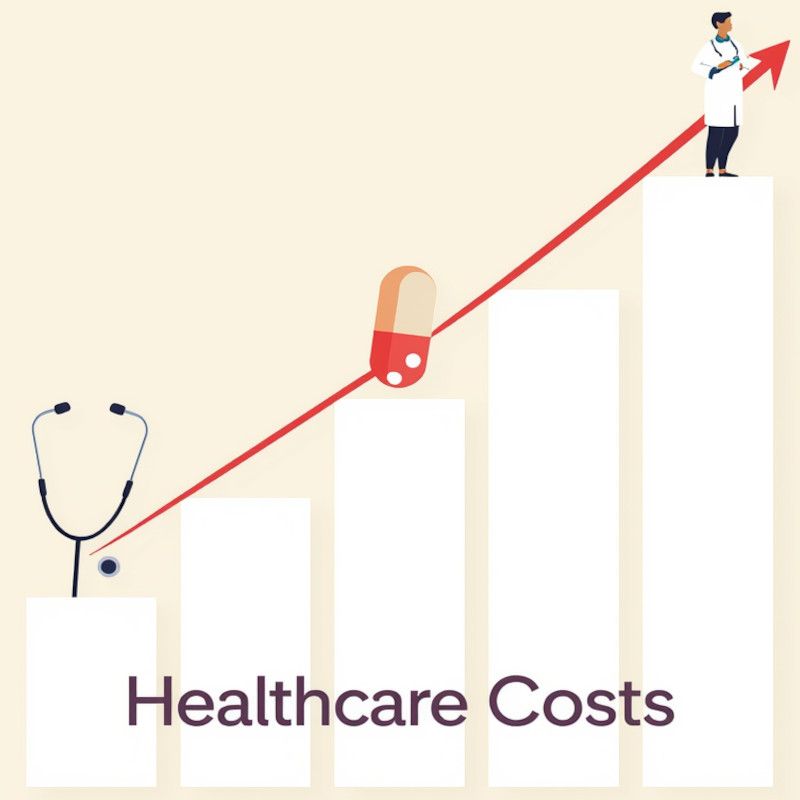
 Obesity accounts (8, 9, 10) for roughly $2,500 to $3,200 higher annual medical costs than people at a healthy weight, driven by treating comorbidities like type 2 diabetes, heart disease, and hypertension. It is estimated that annual direct obesity medical costs range from $173 billion to over $260 billion, contributing to nearly 21% of all national medical spending.
GLP-1 drugs have further increased costs, significantly (11, 12, 13). Wegovy, Zepbound, and Ozempic, no less, have added over 600% to total U.S. spending between 2018 and 2026, surpassing $1 trillion. In 2026, healthcare premiums have skyrocketed 30% to 80%.
Meanwhile, approximately two-thirds (14) of the population is experiencing some degree of skinny fat (lack of genetic muscle). While 60% (7) of the average daily American diet is ultra-processed (UPF), fast, and junk food. Such foods are known to cause serious blood glucose spikes, which eventually leads to insulin resistance, type 2 diabetes, being overweight, and obesity. The companies that make these damaging foods suffer no consequences. A reasonable healthcare tax on UPFs is the simple solution. Instead, those companies, along with GLP-1 companies (some with ties to the UPF companies), make massive windfall profits, passing the cost on to the average healthcare premium payor. The vast majority of whom cannot afford to pay.
Where Does the Responsibility Lie?
There is no doubt that those companies, at least, are responsible for the health crisis (15) here in America, and globally. But the people buying the UPFs are also culpable. Most have the ability to choose healthier food, yet they willfully refuse out of ignorance or apathy, or both. Which is why a fair healthcare tax is the simplest solution. People can still choose to buy unhealthy UPFs, but they are proactively paying for their healthcare when they buy the food. Sin taxes on alcohol and tobacco and the like—things that damage human health—already exist.
Despite spending nearly 18% of its GDP on healthcare—twice the average of peer countries—the U.S. has the lowest life expectancy and the highest rates of avoidable deaths among high-income nations (16, 17, 18). Along with the aforementioned healthcare tax, further effective solutions are also straightforward. The answer? Regular and consistent healthy daily diet, exercise, and lifestyle routines.
We developed the Scientific Health Quizzes to give the average person affordable, easily accessible, and user-friendly tools to better comprehend their unique body composition (particularly skinny fat) and metabolism, along with healthy diet, exercise, and lifestyle. Accounts are free, secure, private, and anonymous (depending on what information you choose to give). You can track your progress over time. Free options are available.

References
- Skinny Fact Science: Is Low Muscle Genetic?, April 15, 2026. https://skinnyfat.fellowone.com/skinny-fat-science/is-low-muscle-genetic/
- Skinny Fact Science: What Is Skinny Fat? July 26, 2024. https://skinnyfat.fellowone.com/skinny-fat-science/what-is-skinny-fat/
- Skinny Fact Science: Is Muscle/Mass Genetic and How Does It Affect Skinny Fat?, November 20, 2024. https://skinnyfat.fellowone.com/skinny-fat-science/is-muscle-mass-genetic-and-how-does-it-affect-skinny-fat/
- Skinny Fact Science: Is Skinny Fat Genetic?, November 27, 2024. https://skinnyfat.fellowone.com/skinny-fat-science/is-skinny-fat-genetic/
- Skinny Fact Science: How To Fix Skinny Fat. July 27, 2024. https://skinnyfat.fellowone.com/skinny-fat-science/how-to-fix-skinny-fat/
- Skinny Fat Science: How Skinny Fat Affects Metabolism, August 7, 2024. https://skinnyfat.fellowone.com/skinny-fat-science/how-skinny-fat-affects-metabolism/
- Skinny Fat Science: Skinny Fat & Insulin Resistance, July 4, 2025. https://skinnyfat.fellowone.com/skinny-fat-science/skinny-fat-insulin-resistance/
- U.S. Centers for Disease Control and Prevention: About Obesity, January 23, 2024. https://www.cdc.gov/obesity/php/about/index.html
- NIH, National Library of Medicine: Direct medical costs of obesity in the United States and the most populous states, March 2021, John Cawley, Adam Biener, Chad Meyerhoefer, Yuchen Ding, Tracy Zvenyach, B Gabriel Smolarz, and Abhilasha Ramasamy. https://pmc.ncbi.nlm.nih.gov/articles/PMC10394178/
- Obesity Medicine Association: How Much Does Obesity Cost the U.S?, July 25, 2023, https://obesitymedicine.org/blog/health-economic-impact-of-obesity/
- KFF: ACA Insurers Are Raising Premiums by an Estimated 26%, but Most Enrollees Could See Sharper Increases in What They Pay, October 28, 2025, Cynthia Cox. https://www.kff.org/quick-take/aca-insurers-are-raising-premiums-by-an-estimated-26-but-most-enrollees-could-see-sharper-increases-in-what-they-pay/
- The Harvard Gazette: Pricey blockbuster GLP-1s are costing users — and most of the rest of us, too, February 13, 2026. Sy Bole. https://news.harvard.edu/gazette/story/2026/02/pricey-blockbuster-glp-1s-are-costing-users-and-most-of-the-rest-of-us-too/
- The Commonwealth Fund: New Federal Policies Spur Higher Health Insurance Premiums for Consumers in 2026, Insurer Filings Show, September 30, 2025, Stacey Pogue, Justin Giovannelli, Sabrina Corlette, and Karen Davenport. https://www.commonwealthfund.org/blog/2025/new-federal-policies-spur-higher-health-insurance-premiums-consumers-2026-insurer-filings
- Fellow One Research: Body Type Science Research Data. https://fellowone.com/category/fellow-one-research/the-four-body-types/body-type-science/body-type-quiz/research-data/
- Skinny Fat Science: Skinny Fat Science Supports the Growing Youth Movement for Healthy Diet, Exercise, and Lifestyle, November 26, 2025. https://skinnyfat.fellowone.com/skinny-fat-science/skinny-fat-science-supports-the-growing-youth-movement-for-healthy-diet-exercise-and-lifestyle/
- The Commonwealth Fund: U.S. Health Care from a Global Perspective, 2022: Accelerating Spending, Worsening Outcomes, January 31, 2023, Munira Z. Gunja, Evan D. Gumas, and Reginald D. Williams II. https://www.commonwealthfund.org/publications/issue-briefs/2023/jan/us-health-care-global-perspective-2022
- Peterson KFF, Health System Tracker: How does U.S. life expectancy compare to other countries?, March 31, 2026, Shameek Rakshit, Lynne Cotter, and Matt McGough. https://www.healthsystemtracker.org/chart-collection/u-s-life-expectancy-compare-countries/
- NIH, National Library of Medicine: Valuing America’s Health: Aligning Financing to Reward Better Health and Well-Being. https://www.ncbi.nlm.nih.gov/books/NBK605591/
Was this article helpful?
Related Posts
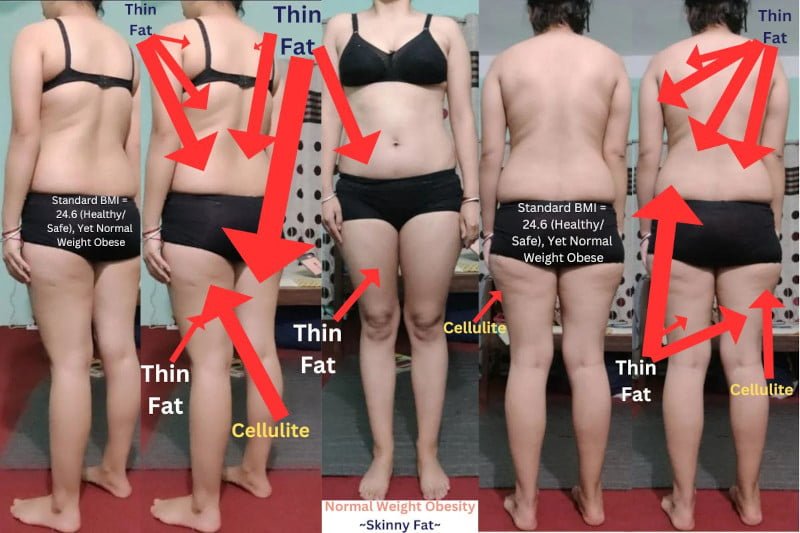
What Is Skinny Fat?
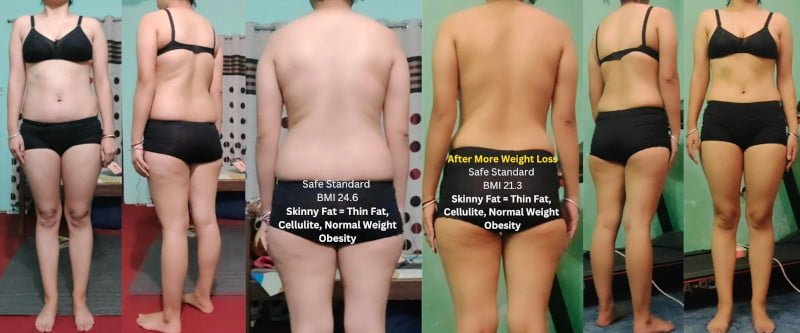
How to Fix Skinny Fat
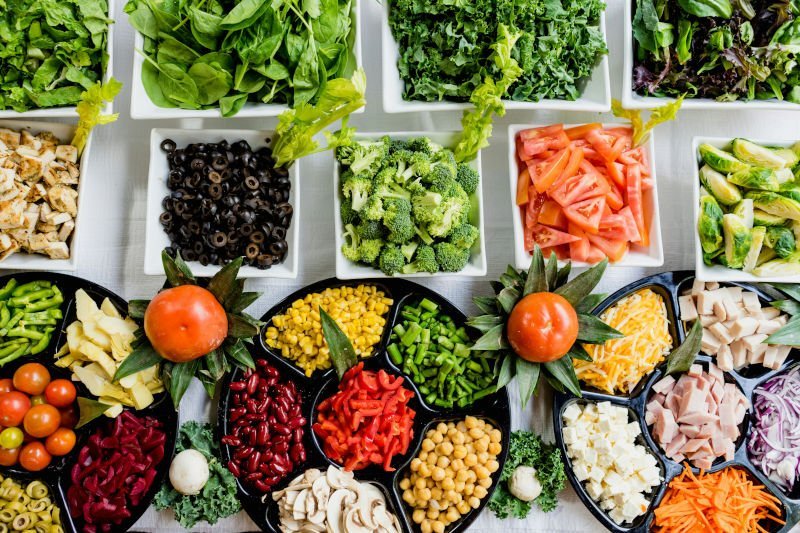
The Best Skinny Fat Diet, According to Science

Popular Concepts
- Skinny Fat: “Thin Fat”, Cellulite, and Deficient Muscle

- Lean Body Mass (LBM) and Skinny Fat
- What Body Fat Percentage Is Skinny Fat?
- Skinny Fat Body Composition – Before & After Weight Loss
- Skinny Fat & Insulin Resistance
- Body Dysmorphia and Skinny Fat Including Anorexia & Other Eating Disorders
- How Skinny Fat Affects Body Shape
- Skinny Fat Is More Than Just Normal-Weight Obesity